Lake Management
Algae control as part of an Integrated Lake Management Plan: water testing, treatment, and the reporting Dubai Municipality compliance depends on.
Learn moreAlgae control is the process of managing and preventing algae growth in a water body so it stays clear, oxygenated and safe.
In UAE lakes it matters more than in cooler climates: high temperatures, strong sunlight and nutrient-rich top-up water mean a lake can turn green within days, fail a visual inspection, develop odour, breed mosquitoes or produce toxic blue-green blooms. Effective control is not a one-off treatment - it combines removing the visible algae with fixing the conditions that let it grow back.
Algae control means keeping algae at a level that does not damage water quality, appearance, safety or the lake's ecosystem.
Some algae is normal and even beneficial; the problem is uncontrolled blooms. In the UAE, amenity lakes, hotel lagoons, golf-course water features, community lakes and irrigation ponds are usually artificial, shallow, and topped up with treated sewage effluent (TSE) or groundwater that is high in nutrients. Left unmanaged, these conditions produce recurring blooms that lead to green water, surface scum, bad odour, reduced dissolved oxygen, fish stress or kills, mosquito breeding, and - with blue-green algae - a genuine health risk. Control protects the asset, keeps it compliant with local environmental expectations, and avoids the cost of emergency clean-ups.
UAE lakes bloom because heat, light and excess nutrients combine to feed algae faster than nature can clear it.
The main drivers are:
Because several of these drivers usually act together, treating only the visible algae rarely holds. Lasting control means reducing the nutrients and sludge and improving oxygen and circulation.
Correct identification matters because each algae type is controlled differently.
The three most common in UAE water bodies are:
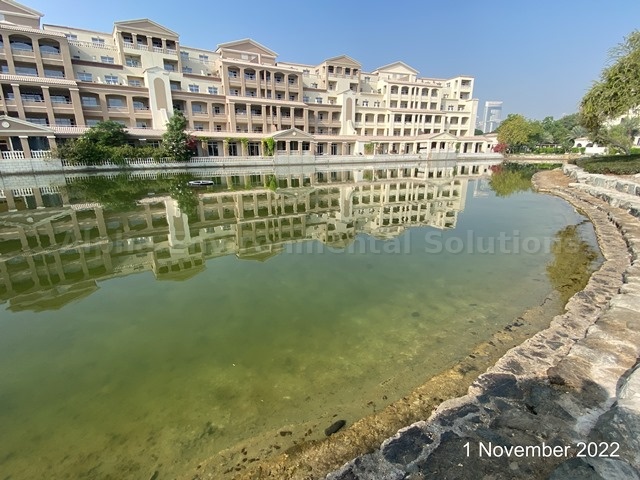 Planktonic (green) algae
Microscopic, free-floating algae that turn the whole water column green or "pea-soup". The most common cause of poor clarity in amenity lakes.
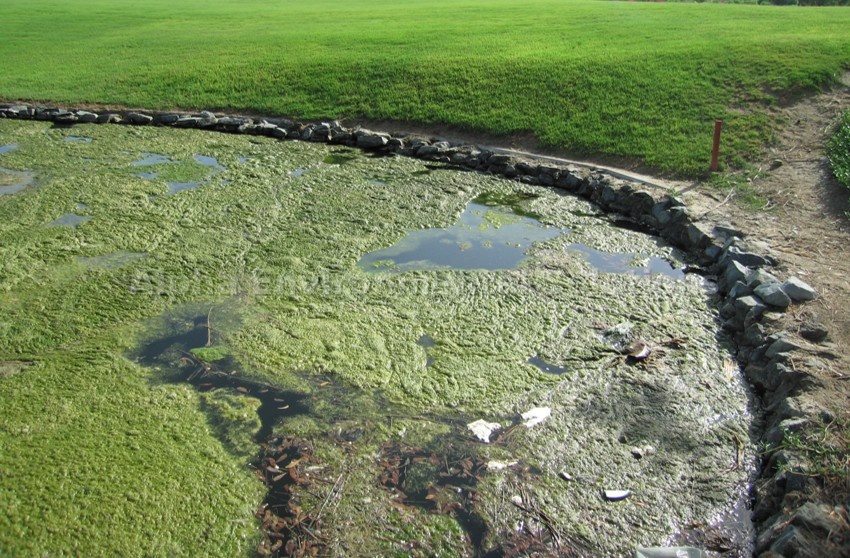 Filamentous (string) algae
Hair-like or mat-forming algae that float in clumps or coat edges, rocks and structures. Unsightly and can clog pumps, fountains and intakes.
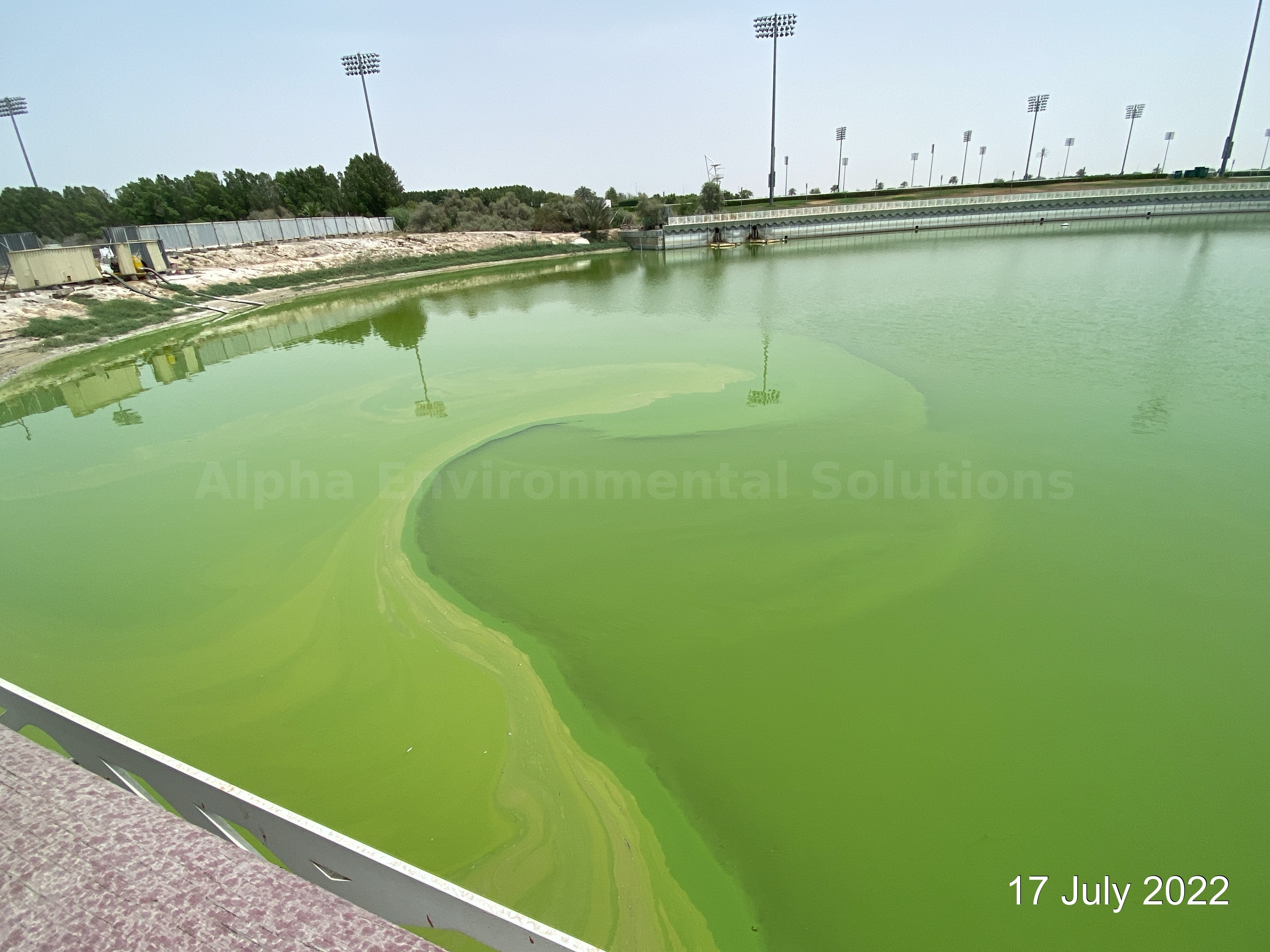 Blue-green algae (cyanobacteria)
Not true algae but bacteria that photosynthesise. They form blue-green surface scums and some species release toxins harmful to people, pets and wildlife. These are the highest-priority blooms because of the health and odour risk.
A water test and visual survey confirm which type is present and how severe the bloom is, which determines the right control method.
Algae control methods fall into two groups: rapid knock-down of a visible bloom, and root-cause control that stops it returning.
Durable results in UAE conditions come from combining them. The main methods:
| Method | How it works | Best for | Limitation |
|---|---|---|---|
| Aeration & circulation | Raises dissolved oxygen and keeps water moving so beneficial bacteria break down nutrients and stagnation is removed | Long-term prevention in most UAE lakes and lagoons | Does not clear an existing bloom on its own; works over weeks, not hours |
| Nutrient & sludge management | Removes the food source by reducing bed sludge and controlling incoming nutrients from TSE and run-off | Lakes with recurring blooms and heavy sludge load | Requires assessment and, for sludge, dredging or dewatering |
| Biological treatment | Beneficial bacteria and enzymes digest organic matter and out-compete algae for nutrients | Ongoing maintenance and prevention; chemical-minimising programmes | Gradual; must be dosed and maintained correctly |
| Ultrasonic control | Ultrasonic waves disrupt algae cells and limit their buoyancy and growth | Targeted control in defined water bodies as part of a programme | Effectiveness varies by algae type and layout; a supplement, not a standalone fix |
| Mechanical removal | Physically skims, harvests or removes surface scum and filamentous mats | Fast visible clean-up and clearing clogged intakes | Treats the symptom only; algae returns unless causes are fixed |
| Chemical algaecides | Approved products kill algae quickly for a rapid knock-down | Controlled short-term reduction within a wider plan | Symptom only; over-use harms other aquatic life and adds dead algae to sludge |
The right method depends on the algae type, the cause, the setting and whether you need a one-off clean-up or a lasting programme.
As a rule: identify the algae and test the water first; use mechanical or chemical treatment only to knock down a bloom quickly; and pair it with aeration, biological treatment and nutrient or sludge reduction to stop it coming back. A blue-green (cyanobacteria) bloom should be prioritised for its health risk. A lake with heavy bed sludge will keep blooming until the sludge is reduced, no matter how often the surface is treated. Matching the method to the actual cause is what separates a lake that stays clear from one that is treated again every few weeks.
The same principles apply, but priorities shift by setting.
Effective algae control shows up as measurable, sustained improvement - not just a lake that looks better for a week.
The clearest indicators are improved water clarity (measured by depth), stable dissolved oxygen, the absence of surface scum and odour, and fewer repeat blooms over a season. On UAE water bodies Alpha Environmental Solutions has restored measured clarity from around 30 cm to 120 cm by combining bloom removal with aeration and nutrient and sludge management, and tracks before-and-after readings so the result is verifiable rather than visual. A credible programme should always define what "controlled" means in numbers for your specific lake and report against it.


The clarity readings behind that figure, and three other documented UAE water bodies, are set out in the measured case studies. Client names are withheld at our customers' request; the readings are not.
There is no single instant fix that lasts. Mechanical or chemical treatment can clear a visible bloom within days, but the algae returns unless the underlying cause is addressed. Lasting control in UAE conditions comes from combining a rapid knock-down (mechanical removal or a targeted algaecide) with root-cause measures - aeration to raise dissolved oxygen, nutrient and sludge reduction to remove the food source, and circulation to stop stagnation.
High year-round temperatures, intense sunlight, and the frequent use of treated sewage effluent (TSE) for irrigation and top-up water all accelerate algae growth. TSE and fertiliser run-off carry nitrogen and phosphorus that feed blooms, while heat lowers dissolved oxygen and encourages stratification. In a shallow, still, nutrient-rich lake in Gulf conditions a bloom can develop within days.
It can be. Blue-green algae are cyanobacteria, and some species release toxins that are harmful to people, pets and wildlife, and can cause skin irritation and a foul odour. In amenity and community lakes a cyanobacteria bloom is both a health concern and a reputational one, so it should be assessed and managed promptly rather than left to clear on its own.
Aeration does not kill algae directly, but it is one of the most effective long-term controls. By raising dissolved oxygen and keeping the water circulating, aeration helps beneficial bacteria break down the nutrients and organic sludge that algae feed on, and it removes the still, warm, low-oxygen conditions where blooms thrive. It works best combined with nutrient and sludge management.
Approved algaecides can be used safely when applied at the correct dose by trained operators, but they treat the symptom, not the cause, and over-use can harm other aquatic life and leave dead algae that adds to the sludge load. In UAE amenity and TSE-fed lakes they are best used as a controlled knock-down step within a wider programme, alongside aeration and nutrient reduction, and in line with local environmental requirements.
Cost depends on the size and depth of the water body, the algae type and severity, how much nutrient and sludge has built up, and whether the work is a one-off clean-up or an ongoing maintenance programme. The most reliable way to get an accurate figure is a site assessment and water test, which is the basis for a scoped plan rather than a guessed price.
Algae control as part of an Integrated Lake Management Plan: water testing, treatment, and the reporting Dubai Municipality compliance depends on.
Learn moreCirculation and oxygenation, the root-cause control described above, holding dissolved oxygen steady between visits.
Learn moreRemoving the bed sludge that keeps releasing stored nutrients, which is why blooms return after the surface is cleared.
Learn moreThe same principles at smaller scale, for ornamental ponds and community water features with filtration and fountains.
Learn moreA site assessment and water test identify the algae type and the cause, and form the basis of a scoped control plan rather than a guessed price. Alpha Environmental Solutions LLC has managed man-made lakes, ornamental ponds, lagoons and shorelines across the UAE since 2007.